
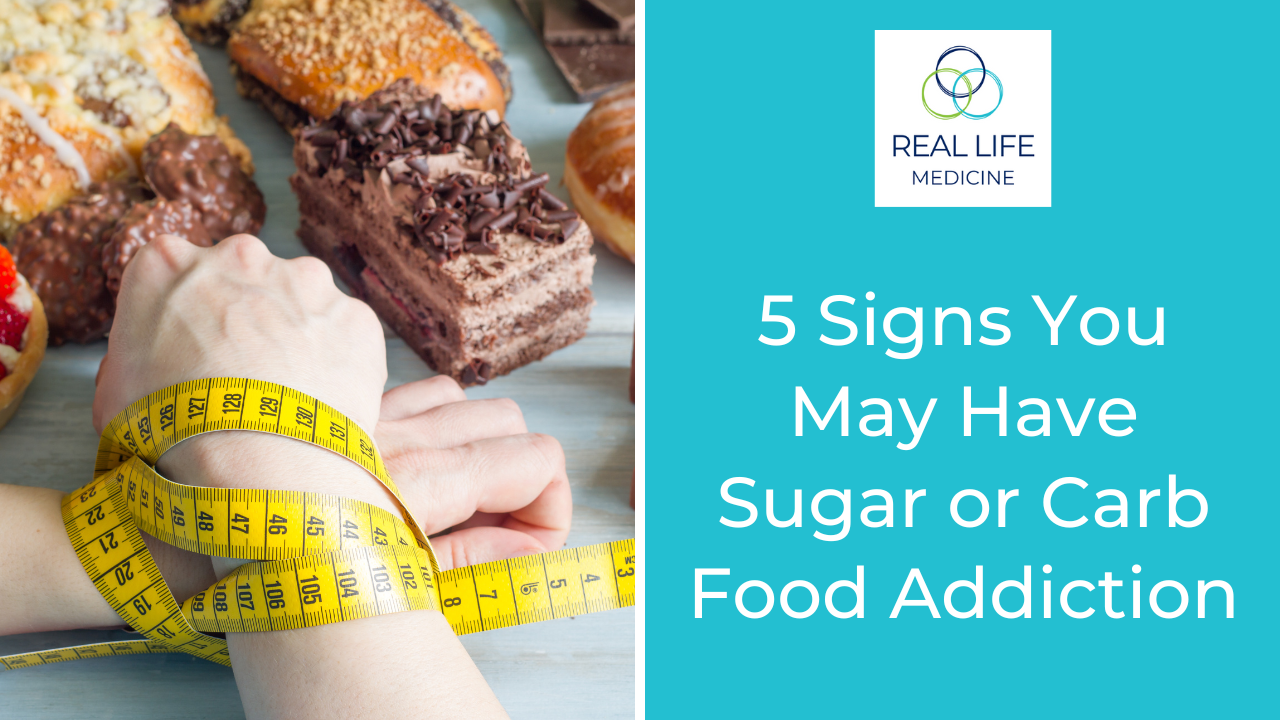
Why you can't stop eating ultra-processed foods — and what actually helps
Jun 12, 2026It is not about willpower. It is about your brain's reward system, and there is a way to work with it.
This week, we want to talk about something that affects so many people yet is so often misunderstood: ultra-processed food addiction, sometimes called sugar addiction or carb addiction.
If you have ever felt stuck in a cycle with foods like chocolate, chips, biscuits, takeaway pizza, or even bread, please know you are not alone. And you are not to blame.
Ultra-processed foods are engineered by the food industry to be irresistible. They are packed with added sugar, refined carbohydrates, fats, and salt, designed to override your natural hunger signals and keep you coming back for more. They are built to deliver the maximum dopamine hit, making your brain light up like a Christmas tree. The cruel twist? The more you have, the more you want. Like an insatiable thirst. An itch that can never be scratched.
The fault lies not with you, but with a system that profits from your struggles.
Recent research, including studies published in Frontiers in Psychiatry and Nutrients, shows that up to 20% of adults may experience ultra-processed food addiction. The signs often mirror those of other recognised addictions.
5 signs you may be experiencing food addiction
1. Loss of control around ultra-processed foods
Do you find it nearly impossible to stop eating certain foods, even when you are full or have promised yourself you will cut back? This is not a lack of willpower. These foods are designed to make you lose control. Remember the Pringles slogan: "Once you pop, you can't stop." That was not an accident.
2. Intense cravings and preoccupation
Do thoughts of certain foods take over your mind, making it hard to focus on anything else? This is what many women call "food noise", and it is a direct result of how these foods are engineered to hijack your brain's reward system. Some women are more susceptible to food noise than others, including those with a history of trauma, ADHD, or neurodiversity. There is also a likely relationship with the gut microbiome.
3. Eating despite negative consequences
Do you keep returning to your chosen food even when you know it is affecting your health or mood? You know it is causing gut aches or pushing up your blood sugars, yet you feel powerless to stop. The food industry spends billions of dollars to make sure you keep coming back, no matter the cost to your wellbeing.
4. Withdrawal when cutting back
Have you noticed irritability, headaches, or low mood when you try to cut these foods out? These are real withdrawal symptoms, similar to those seen in other addictions. They are a sign of just how powerful these foods can be.
5. Hiding or feeling shame about eating habits
Do you eat these foods in secret, or feel guilty afterwards? Feelings of guilt, shame, or self-loathing often follow episodes of overeating. You might also eat to manage difficult emotions, using food as a source of comfort or relief from stress, only to feel worse afterwards. This is a completely understandable response to a system that has been designed to make you feel this way.
These signs are adapted from validated tools including the Yale Food Addiction Scale and criteria used in research on substance use disorders.
You are not broken. But willpower is not enough.
If you see yourself in any of these signs, please hear this: you are not weak, broken, or lacking discipline. These foods are purposely designed to be overeaten. The blame lies with the industry, not with you.
Healing begins with understanding, self-compassion, and the right skills. Willpower alone is not a strategy. What makes the difference is learning how your brain works, and building the strategies, skills, and tools to work with it rather than against it.
Introducing the Reward Path Reset
At Real Life Medicine, we use a structured approach called the Reward Path Reset to help women break the cycle of ultra-processed food addiction. It works by targeting the three biological and psychological pathways that keep that cycle going.
We call it the DEM framework.
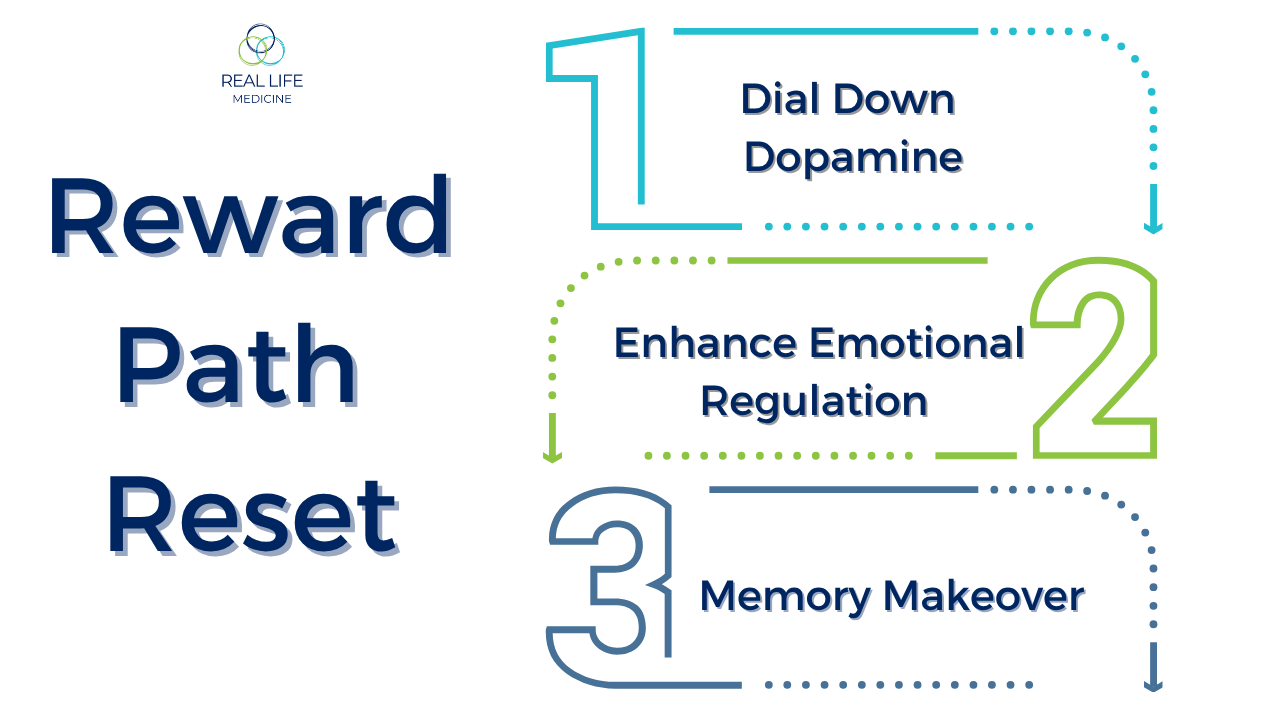
Step 1: Dial down dopamine
Ultra-processed foods flood the brain with dopamine, the "wanting" chemical, far beyond what any whole food can deliver. Over time, your baseline dopamine sensitivity drops. Everyday life can feel flat, and these foods start to feel like one of the only reliable sources of pleasure.
The first step is learning to dial this down gradually, reducing the dopamine spikes from processed foods while rebuilding sensitivity through natural rewards like movement, connection, and sleep. This is not about deprivation. It is about recalibrating your brain's reward system so that real food and real life feel satisfying again.
Step 2: Enhance emotional regulation
Food addiction rarely exists in isolation. For many women, ultra-processed foods have become the primary way of managing difficult emotions: stress, boredom, loneliness, anxiety. Not because those women are weak, but because no one ever taught them another way, and these foods work, at least in the short term.
This step builds the skills to sit with and regulate difficult emotions without reaching for food. Using evidence-based techniques, we help you create new neural pathways, so that over time the pull to eat in response to emotion becomes weaker, and your capacity to move through discomfort grows stronger.
Step 3: Memory makeover
Your brain holds powerful memories that link specific foods, places, and situations with reward and relief. These memory cues can trigger cravings even when you have no conscious intention to eat.
The memory makeover works by updating these associations, replacing old reward memories with new ones, and changing the story your brain tells about certain foods. This is where lasting change tends to take hold.
Your path forward
The Reward Path Reset and DEM framework are introduced inside My Metabolic Action Plan (My MAP), our structured programme that gives you a clear, personalised path forward. The skills you build are then embedded and reinforced inside Momentum, our ongoing membership, where you consolidate your progress and keep moving forward with support and community around you.
This is not a diet. There is no calorie counting. It is a way of understanding what has actually been driving your relationship with food, and changing it from the inside out.
If any of this resonates, we would love to support you with your first doable step at My Metabolic Action Plan
Check out My Metabolic Action Plan

Dr Mary Barson and Dr Lucy are the founders of Real Life Medicine. They help women who have been on every diet under the sun, optimise their health and achieve long lasting weight loss without feeling miserable or deprived.
They do this with their 3 step framework that
- Improves metabolism
- Develops mindset skills
- Provides tools to implement it easily into busy lives
With this comes increased energy, vitality and confidence.
You can avoid chronic disease and stop living life on the sidelines!
Check out My Metabolic Action Plan
